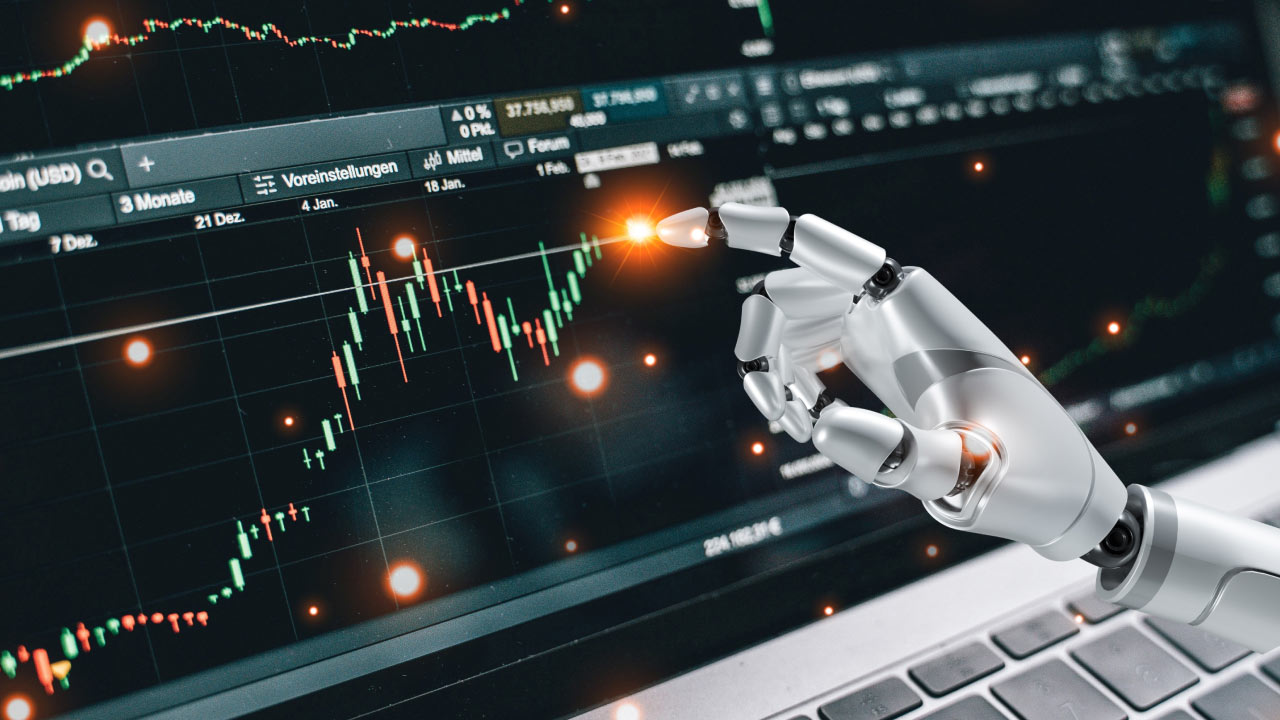
One of the crucial steps for a professional futures trader is trading on paper first understanding it correctly. A secure environment is necessary for traders to develop their discipline, gain their confidence and test their strategies before risking their money or applying for an Instant Funding Futures Prop Firm. The practice of paper trading is the one that provides such a foundation. This article will investigate how paper trading operates, the reasons why it is significant, and how it directly prepares traders for the success of instant funding futures prop firms.
What Is Paper Trading and Why It Matters
To get the full picture of what is paper trading it is easier if one thinks about it being a simulated trading that uses real market data but no money is involved. There is a purchase and sale of an asset in a demo or fake account that represents the real market conditions, including the price changes, spreads, and order execution logic. The only element that is not there is the financial risk.
The significance of paper trading is that it absolutely removes the emotional pressure but at the same time it gives the technical realism as a trading scenario. A trader can do the futures trading, test all different order types, and even pass through the market's ups and downs without the fear of losing. This is exactly what the complete novice in futures trading needs to practice learning the mechanics of trading. Besides, it is also the perfect asset for the skilled traders who want to test their new strategies before the money is put in.
How Paper Trading Builds Core Futures Trading Skills
There is paper trading, which is not only practice but also a structured skill development. The traders get to know how the futures market is behaving during different sessions and conditions through the repeated trade execution in the simulated environment.
Repetition makes it easy to understand the contract specifications, tick values, margin requirements, and leverage. Besides, risk management skills are also enhanced as traders realize the impact of position sizing and stop-loss placement on overall performance. Such skills are vital, for futures trading is a very exacting process, and the instant funding prop firms expect the traders to have the very same foundation on which they base their trading.
Paper Trading and Strategy Development
This stronghold that paper trading gives one, most especially the cultivation of strategies, is one of its major advantages. Traders can hurl themselves into different ways of trading, from scalping to swing trading, and all this, without suffering any financial losses. Gradually, traders will come to know which strategies are able to give a consistent performance, while others only last for a short time and stop performing at all when the market conditions turn certain ways.
What is paper trading, traders have fully and correctly understood, that is why they have turned it into a data-gathering tool. The tracking and analyzing of win rates, drawdowns, average risk-to-reward ratios, and trade frequency can be done all at once with the help of the data-driven approach the traders take. The development of the traders' strategies is thus made easier as they conform to the strict rules of an Instant Funding Futures Prop Firm, such as daily loss limits and maximum drawdown requirements.
Psychological Preparation Through Paper Trading
Even though paper trading does not involve any financial risks, it is still a crucial contributor to mental preparation. Frequent simulated trading helps to develop the three main trader virtues which are routine, discipline, and patience. Traders are able to control themselves and not chase after trades, a skill that must be cultivated and practiced when trading funded accounts.
Another thing that paper trading does is that it opens up the traders’ behavioral weaknesses. Overtrading, revenge trading, and ignoring stop-loss rules often appear in the form of simulated environments where the trader loses money even if he is not risking his capital. Identifying and correcting these habits early gives traders a considerable advantage before transitioning to real capital or instant funding models.
Understanding Instant Funding Futures Prop Firms
Instant Funding Futures Prop Firm is a type of trading firm that provides access to funded accounts to traders almost instantly and in most cases without the usual long evaluation period. As a result, these firms set very rigorous risk parameters such as imposing drawdown limits, defining rules for consistency, and restricting the size of positions.
They are hard on the traders who want to experiment. They expect the trader to be already capable of executing, managing the risk, and remaining disciplined throughout. This is where paper trading becomes a must. The traders who do not take simulated practice often find it difficult to cope with the pressure and rules of instant funding accounts.
How Paper Trading Aligns With Instant Funding Requirements
Paper trading is very similar to the requirements of an Instant Funding Futures Prop Firm if it is done accurately. The traders can mimic precisely the rules such as daily loss limits or maximum contracts per trade that they will be facing. By adhering to these restrictions during paper trading, the traders develop the habits that are directly transferrable to the environments of funded trading.
Such an alignment lessens the learning curve with the involvement of real capital. Rather than changing to new rules under pressure, traders will be able to concentrate on execution and consistency. This kind of preparation usually decides whether a trader will keep a funded account or will lose it quickly.
Transitioning From Paper Trading to Funded Trading
The migration from simulated trading to live funded trading must be gradual and deliberate. Paper trading demonstrates that a strategy is effective but the actual trading period is the true test of consistency. Traders should plan for weeks or even months of disciplined paper trading before they apply to the instant funding program.
Knowing what paper trading is implies knowing its limitations too. The emotional tension is much higher when real money is at stake. Nevertheless, the traders who have already gone through paper trading and built their structured process are the ones who adapt quickly and make fewer costly mistakes during this transition.
Why Paper Trading Is a Long-Term Benefit
Simulated trading continues to be a great tool even after getting a funded prop trading account with an Instant Funding Futures Firm. A lot of professional traders are still trading on simulated accounts in order to test their modifications, get used to the ever-changing market, or even learn about new instruments.
Continued trading improvement is the result of paper trading. The market keeps changing, and a strategy that was successful in one scenario might not work in another. To avoid it, the traders can stay flexible by employing simulation training and thus not risking the loss of their funded capital in any way.
Conclusion: Paper Trading as the Foundation for Funded Success
Preparation is what determines the outcome of futures trading. Knowing what is paper trading and applying it in the right way can be the turn-around point for Instant Funding Futures Prop Firm between victory and defeat. It creates the mastery of technical skills, cultivates discipline, polishes strategies, and prepares traders for the stringent standards of the funded accounts.
A long-term success mindset has it that paper trading is a necessity. It is an arena where stability is built, errors are rectified, and confidence is won. The ones who complete this stage enter instant funding futures prop firms equipped, experienced, and ready for a thriving future.